Pages

What do you mean by representative assessee? Discuss in detail liabilities of representative assessee under the Income Tax Act.


Representative Assessee Under the Income Tax Act, 1961

A representative assessee is a person who is appointed by law to represent another person (such as a minor, a deceased individual, or someone who is mentally incapacitated) in matters related to income tax assessments. The concept is introduced to ensure that the tax obligations of the represented person are fulfilled, even if they are incapable of managing their tax affairs due to various reasons.

The Income Tax Act, 1961, identifies certain circumstances under which a representative assessee is appointed. These situations are typically associated with the following categories:

  1. In the case of a minor, lunatic, or idiot: A guardian or a person legally authorized to act on behalf of the individual.
  2. In the case of a deceased person: The legal heir or representative of the deceased individual.
  3. In the case of a non-resident: A person who is appointed as the representative for tax purposes.
  4. In the case of a Hindu Undivided Family (HUF): The Karta or head of the family.
  5. In the case of a partnership firm: The managing partner or any person authorized by the firm.

Liabilities of Representative Assessee under the Income Tax Act

The liabilities of a representative assessee are crucial because they are bound by the same responsibilities as the person they represent, with specific duties outlined under the Income Tax Act. These liabilities include the following:

  1. Filing of Income Tax Returns:

    • The representative assessee must file the income tax returns on behalf of the person they represent. This includes reporting all income earned by the represented individual or entity, irrespective of whether it is taxable or exempt.
    • In case of a deceased person, the representative assessee files the return for the period during which the person was alive and also for any income earned after death until the final settlement of the estate.
  2. Payment of Taxes:

    • The representative assessee is responsible for the payment of taxes due on the income of the person they represent. They must ensure that any tax liabilities are paid within the prescribed time to avoid penalties or interest.
    • They must also be responsible for payment of advance tax if applicable, on behalf of the represented person.
  3. Assessment Proceedings:

    • During income tax assessments, the representative assessee is expected to attend all proceedings, provide necessary documents, and represent the person in front of the assessing officer.
    • The representative must ensure that all the information required by the tax authorities is provided accurately.
  4. Liability for Defaults:

    • If the representative assessee fails to fulfill their responsibilities, they may be held liable for penalties and interest for defaults in filing returns or payment of taxes. This liability is transferred to the represented person unless the representative has acted negligently.
    • In case of failure to file returns or pay taxes, the representative can be subject to penalties under sections 271(1)(a), 271(1)(c), and others.
  5. Liability for Payment of Arrears:

    • If the person represented by the representative assessee has any pending arrears of tax, the representative is liable to pay those arrears on their behalf.
    • This liability remains even if the representative assessee is unaware of the income or tax liability.
  6. Appeals and Revision:

    • If the representative assessee disagrees with an assessment or a decision made by the tax authorities, they have the right to appeal on behalf of the represented person.
    • The representative assessee can file an appeal with the appropriate appellate authority and challenge assessments, penalties, or tax demands.
  7. Refunds:

    • Any refund that is due to the person being represented is issued to the representative assessee. They are entitled to receive and utilize the refund in accordance with the represented person's interests.
  8. Execution of Orders:

    • The representative assessee is responsible for ensuring the execution of any orders or directions given by the income tax authorities, such as payment of taxes, compliance with notices, or submission of documents.
    • If the represented person is a deceased individual, the legal heirs, as the representative assessee, must ensure that the assessment orders are executed.
  9. Provision of Information:

    • The representative assessee must provide all relevant information that may be required by the assessing officer. This includes responding to notices, providing documents, and complying with information requests.

Key Provisions Under the Income Tax Act Regarding Representative Assessee

  1. Section 160(1): This section defines the term "representative assessee" and specifies the circumstances under which a representative may be appointed.
  2. Section 161: Deals with the liability of a representative assessee, stating that they will be held liable for the taxes due from the person they represent, in the same manner as the represented person.
  3. Section 168: This section specifies the responsibility of the legal representative of a deceased person, making them responsible for fulfilling the tax liabilities of the deceased.
  4. Section 169: It allows the legal representative of a deceased person to apply for a refund of tax that was paid in excess by the deceased.

Conclusion

The role of a representative assessee is crucial in ensuring the tax compliance of individuals or entities who are unable to manage their tax affairs due to specific reasons. While they are entrusted with significant responsibilities, they are also liable for fulfilling the tax obligations of the represented person. Their duties extend to filing returns, paying taxes, attending assessments, and complying with other requirements under the Income Tax Act. Failure to comply with these obligations may lead to penalties or other legal consequences, highlighting the importance of the representative assessee's role in ensuring tax compliance.
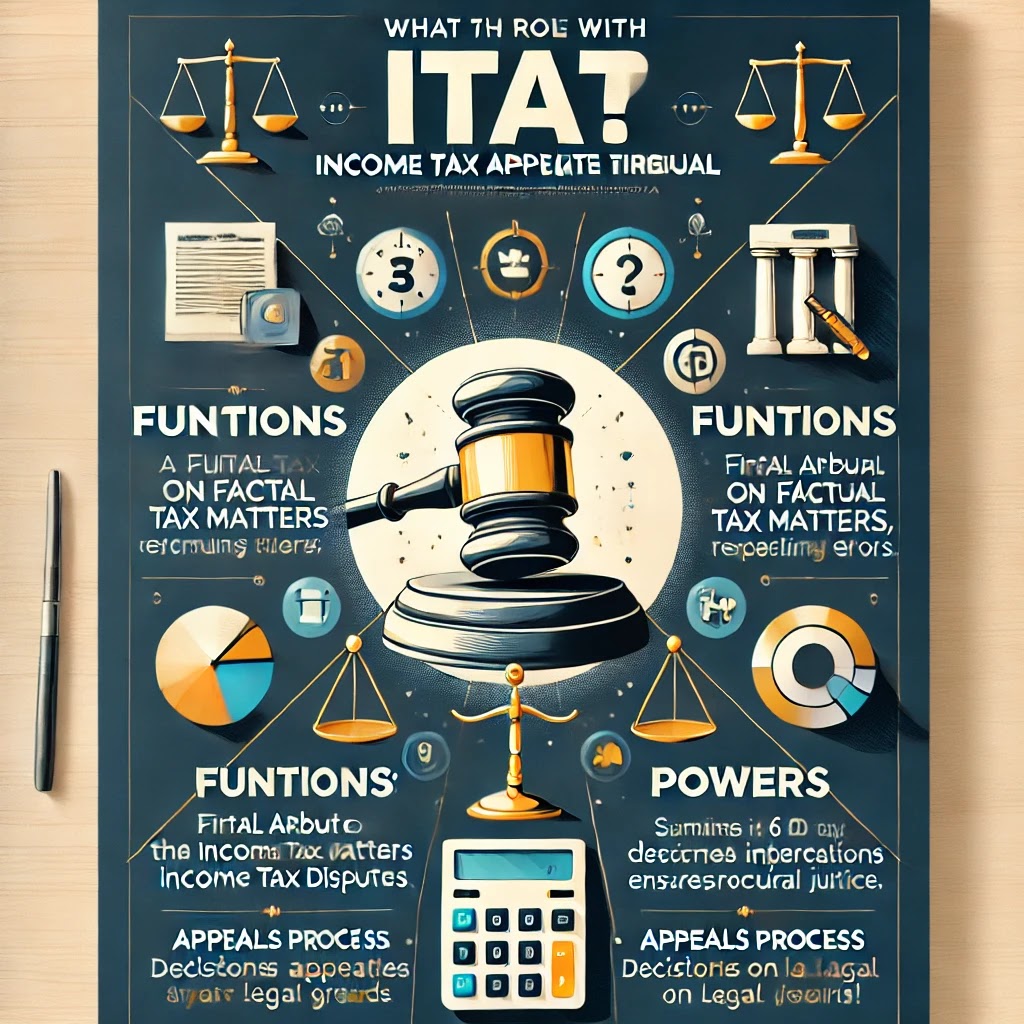
What do you mean by Income Tax Tribunal? Discuss in detail the procedure and powers of National Tax Tribunal under taxation laws in india.


Income Tax Tribunal and National Tax Tribunal in India

Introduction

The Income Tax Appellate Tribunal (ITAT) is a quasi-judicial body established under the Income Tax Act, 1961. It is the final fact-finding authority on disputes related to income tax assessments, appeals, or revisions. The National Tax Tribunal (NTT), a now-abolished body, was conceived to handle disputes involving substantial questions of law under direct and indirect taxation laws.


Income Tax Tribunal

Structure and Jurisdiction:

  1. Composition: ITAT consists of judicial and accountant members who handle appeals against orders of Commissioner of Income Tax (Appeals).
  2. Jurisdiction: It deals with cases involving assessment, penalties, and procedural matters.

Procedure:

  1. Filing of Appeals: Appeals to the ITAT must be filed within 60 days of receiving the order of the Commissioner (Appeals).
  2. Hearing: Both parties (taxpayer and income tax department) present their arguments, supported by evidence.
  3. Orders: The tribunal passes a written order based on majority opinion, which is final and binding unless appealed to the High Court on questions of law.

Powers of ITAT:

  1. Summoning Witnesses: The tribunal can summon individuals or request documents necessary for the case.
  2. Review of Orders: ITAT can rectify mistakes in its orders under specific conditions.
  3. Exercising Judicial Powers: It has the authority to interpret laws and deliver judgments based on precedents.

National Tax Tribunal (NTT)

Background:

  • The NTT was established in 2005 to consolidate appeals from High Courts related to taxation laws.
  • Declared unconstitutional in 2014 by the Supreme Court for violating the separation of powers.

Procedure:

  1. Appeals: Direct appeals to NTT were permitted on substantial legal questions under taxation laws.
  2. Hearing and Disposal: The tribunal followed a structured procedure similar to court hearings.
  3. Final Decision: NTT decisions were binding unless challenged in the Supreme Court.

Powers of NTT:

  1. Interpretation of Tax Laws: It had the authority to adjudicate on disputes involving complex tax interpretations.
  2. Judicial Review: NTT could evaluate whether tax laws were implemented constitutionally.
  3. Binding Precedents: Its rulings were binding on lower tribunals.

Conclusion

While the ITAT continues to function as a critical appellate body for tax-related disputes, the NTT’s abolition underscores the importance of preserving judicial independence. The ITAT serves taxpayers by ensuring fairness and adherence to tax laws, but its decisions can still be reviewed by the judiciary on points of law.


What do you mean by Assessing Officer? Discuss in detail the jurisdiction of income tax authorities given under Section 120 of the Income Tax Act, 1961.

 Assessing Officer and Jurisdiction Under Section 120 of the Income Tax Act, 1961

Assessing Officer (AO):

The Assessing Officer (AO) is an income tax authority who is responsible for assessing the total income or loss of an individual, organization, or entity and determining their tax liability under the Income Tax Act, 1961. The AO plays a pivotal role in the collection of taxes, verification of returns, and compliance enforcement.

Functions of an Assessing Officer:

  1. Assessment of Income: To ensure accurate computation of total income and tax liability.
  2. Scrutiny of Returns: Examines discrepancies or mismatches in income tax returns.
  3. Conducting Inquiries: Gathers evidence to ascertain true income details.
  4. Initiating Penalty Proceedings: Imposes penalties for non-compliance, fraud, or concealment of income.
  5. Issuing Notices: Sends notices for reassessment, inquiries, or recovery of taxes.

Jurisdiction of Income Tax Authorities Under Section 120:

Section 120 of the Income Tax Act, 1961, empowers the Central Board of Direct Taxes (CBDT) to define and assign jurisdiction to various income tax authorities, including Assessing Officers. The allocation is based on specific factors like geographical area, type of taxpayer, or income criteria.

Key Provisions:

  1. Allocation by CBDT:

    • CBDT specifies the jurisdiction of tax authorities based on geographical regions, classes of taxpayers, income levels, or nature of transactions.
    • Jurisdictional areas are defined clearly to prevent overlapping.
  2. Authority Levels:

    • Includes officers such as Income Tax Officers (ITOs), Assistant Commissioners, Deputy Commissioners, and Commissioners of Income Tax (Appeals).
  3. Geographical Jurisdiction:

    • Each AO operates within an assigned geographical area.
  4. Jurisdiction Over Cases:

    • Classification of taxpayers is based on parameters like income range (corporate/non-corporate), professions, or type of returns filed.
    • Specific AO is allocated for specialized cases like search and seizure.
  5. Transfer of Jurisdiction:

    • CBDT holds the power to transfer a case from one AO to another for administrative or functional reasons.
  6. Notification to Taxpayers:

    • Taxpayers are notified of any jurisdictional changes to ensure transparency.

Significance of Jurisdiction:

  • It helps in systematic administration of tax laws.
  • Facilitates accountability and efficiency in tax assessment processes.
  • Ensures disputes related to assessment are handled by appropriate authorities.

Practical Implementation:

  • Jurisdiction is pivotal in cases of reassessment, appeals, and adjudication.
  • The process ensures no taxpayer is assessed by multiple authorities simultaneously, maintaining coherence in tax governance.

Conclusion:

The Assessing Officer under Section 120 serves as a cornerstone of the Indian taxation system. The jurisdictional clarity provided by CBDT ensures smooth functioning, transparency, and equitable assessment processes. This systematic approach minimizes confusion and ensures proper implementation of income tax provisions.

Key Points to Remember: Jurisdiction of Income Tax Authorities (Section 120)

  1. Role of Assessing Officer (AO):

    • AO assesses total income, tax liability, and ensures compliance with tax laws.
    • Responsible for issuing notices, conducting inquiries, and imposing penalties.
  2. Jurisdiction Allocation by CBDT:

    • Central Board of Direct Taxes (CBDT) assigns jurisdiction to tax authorities.
    • Allocation based on geographical regions, taxpayer classes, income levels, or case type.
  3. Geographical and Income-Based Classification:

    • Jurisdiction is defined by the area of operation and specific taxpayer categories.
  4. Transfer of Jurisdiction:

    • Cases can be transferred between AOs by CBDT for administrative efficiency.
  5. Significance of Jurisdiction:

    • Streamlines tax administration and ensures accountability.
    • Prevents overlapping of assessments and ensures clarity in the process.
  6. Notification to Taxpayers:

    • Taxpayers are informed of jurisdictional changes for transparency.
  7. Legal Framework:

    • Section 120 provides the legal basis for defining and delegating AO roles.

Quick Tip: 

Understanding jurisdiction ensures you know which tax authority to approach for queries or disputes, helping avoid unnecessary confusion in the tax process.

How Residential Status of an Individual Determined for Income Tax Purpose Under Taxation Laws in India?

Determination of Residential Status of an Individual for Income Tax Purposes in India

Introduction:

Under Indian taxation laws, the residential status of an individual plays a crucial role in determining the scope of income subject to tax. The Income Tax Act, 1961, specifies the criteria for determining an individual's residential status, which can be categorized as Resident, Resident but Not Ordinarily Resident (RNOR), or Non-Resident (NR).

1. Categories of Residential Status

  1. Resident
    An individual is considered a resident in India if they meet any of the following conditions:

    • Stayed in India for 182 days or more during the relevant financial year.
    • Stayed in India for 60 days or more during the relevant financial year and for 365 days or more in the preceding four years.
  2. Resident but Not Ordinarily Resident (RNOR)
    A resident is classified as RNOR if:

    • They were a non-resident in 9 out of the 10 preceding financial years, or
    • They stayed in India for 729 days or less during the preceding 7 financial years.
  3. Non-Resident (NR)
    An individual who does not meet the criteria for being a resident is considered a non-resident.


2. Exceptions to the Rule

  • Indian Citizens or Persons of Indian Origin (PIO):
    For Indian citizens or PIOs who visit India, the condition of 60 days is extended to 182 days.
  • Crew Members of Indian Ships:
    Days spent outside India as part of duties are excluded when calculating residency.

3. Importance of Residential Status

The residential status determines the taxability of income:

  1. Resident
    • Global income is taxable in India.
  2. RNOR
    • Income earned or accrued in India is taxable, but foreign income is not, unless it is derived from a business controlled in India.
  3. Non-Resident
    • Only income earned or accrued in India is taxable.

4. Special Provisions for Certain Individuals

  • Seafarers and Diplomats have specific rules due to their unique employment and postings.
  • Double Taxation Avoidance Agreements (DTAA) may impact taxation for individuals having residency in multiple countries.

5. Case Law and Judicial Interpretation

Judicial precedents further clarify the interpretation of "stay" and "intention to reside," helping tax authorities determine residential status accurately.


Conclusion

Determination of residential status is fundamental to taxation under the Income Tax Act. Accurate assessment ensures the correct application of tax laws and avoids legal complications. Individuals should maintain proper records of their stay in India and consult tax professionals for compliance.


What are the powers of Income Tax Authority with regard to rectification of mistake under taxation laws in India?

 Under Indian taxation laws, Income Tax Authorities are empowered to rectify mistakes apparent from the record under Section 154 of the Income Tax Act, 1961. The powers related to rectification of mistakes are as follows:

1. Scope of Rectification (Section 154(1))

Income Tax Authorities can amend:

  • Orders passed by themselves.
  • Intimation or deemed intimation under Section 143(1).
  • Orders passed under Section 200A (processing of TDS statements) or 206CB (processing of TCS statements).
  • Orders passed under Section 92CD related to Advance Pricing Agreements.

2. Types of Mistakes Rectifiable

The rectification power is limited to mistakes apparent from the record, such as:

  • Clerical or arithmetical errors.
  • Errors in law that are obvious and not debatable.
  • Incorrect application of provisions like wrong computation of tax, omission of deductions, or rebates.

3. Suo Moto or on Application

Rectification can be initiated:

  • By the Income Tax Authority on its own.
  • On an application made by the taxpayer or the Assessing Officer.

4. Time Limit for Rectification

  • The rectification must be carried out within 4 years from the end of the financial year in which the order sought to be amended was passed.
  • For rectification applications made by taxpayers, the authority must dispose of the application within 6 months from the end of the month in which the application is received.

5. Procedure for Rectification

  • The authority must provide the taxpayer with an opportunity of being heard if the rectification results in an increase in tax liability or reduction of refund.

6. Impact of Rectification

  • A rectified order substitutes the original order and is considered final unless further appealed.

7. Restrictions on Rectification

  • Rectification cannot be used to review or reconsider the case.
  • It is confined to correcting errors evident from the record; debatable issues cannot be rectified.

8. Rectification in Appeals and Revisions

  • Powers to rectify mistakes also extend to appellate authorities like the Commissioner of Income Tax (Appeals) and the Income Tax Appellate Tribunal (ITAT).

9. Consequences of Non-compliance

Failure to comply with a rectified order may lead to interest, penalty, or further legal action under the Act.

Relevant Case Laws

  1. T.S. Balaram v. Volkart Brothers (1971): Clarified that rectification cannot address debatable issues.
  2. ITO v. Asok Textiles Ltd. (1961): Highlighted that errors must be obvious from records without requiring detailed arguments.

Conclusion

The rectification powers under Section 154 aim to ensure correctness and efficiency in tax administration by allowing correction of evident errors. However, these powers are restricted to avoid misuse and ensure fairness to taxpayers.


What do you mean by assessment? Discuss in detail the types of assessment under Taxation Acts in India.

Assessment in Taxation Acts in India

Introduction

In the context of taxation, assessment refers to the determination of the tax liability of a taxpayer by the tax authorities based on the provisions of the applicable tax laws. It includes the process of examining and verifying the returns filed by the taxpayer, determining the correct income, and computing the tax payable or refundable.

The primary goal of assessment is to ensure that taxpayers comply with tax laws, declare their income accurately, and pay the correct amount of taxes.

Types of Assessment Under Taxation Acts in India

The Income Tax Act, 1961, provides for several types of assessments to ensure compliance and rectify any discrepancies:

1. Self-Assessment (Section 140A)

  • This is the assessment made by the taxpayer themselves before filing their income tax return.
  • The taxpayer calculates their total income, applicable deductions, and computes the tax payable.
  • Any tax liability is required to be paid before filing the return.
  • Example: If a taxpayer computes their income as ₹10,00,000, they must calculate and pay tax based on the slab rate before submitting their return.

2. Summary Assessment (Section 143(1))

  • Also known as Intimation Assessment, this is done without any human intervention based on the return filed.
  • The system compares the taxpayer's return with available records, like TDS and advance tax, and checks for arithmetical errors, incorrect claims, or mismatches.
  • If discrepancies arise, they are communicated to the taxpayer, and adjustments are made automatically.
  • Example: If a taxpayer claims excess deductions that don't match with their Form 16 or Form 26AS, the system will rectify it.

3. Regular or Scrutiny Assessment (Section 143(3))

  • This is a detailed assessment conducted to ensure the taxpayer has accurately reported their income and paid taxes correctly.
  • The Assessing Officer (AO) examines the return and supporting documents like bills, books of accounts, etc.
  • It is initiated by issuing a notice to the taxpayer.
  • Example: If a business taxpayer declares low profits despite high turnover, the AO may scrutinize their records.

4. Best Judgment Assessment (Section 144)

  • This assessment is made by the AO when the taxpayer:
    • Fails to file a return.
    • Does not comply with notices.
    • Provides incomplete or inaccurate details.
  • The AO assesses the income based on available information and estimates the tax liability.
  • Example: If a taxpayer fails to respond to scrutiny notices, the AO will finalize the assessment based on data from third-party sources or past records.

5. Reassessment or Income Escaping Assessment (Section 147)

  • This is conducted when the AO believes that some income has escaped assessment in a previous year.
  • A notice is issued under Section 148 to reopen the assessment.
  • Example: If undisclosed foreign income is detected later, the AO can reassess the taxpayer's return.

6. Protective Assessment

  • This is done in cases of uncertainty, such as disputes involving ownership of income or assets.
  • The tax is provisionally assessed to protect the interest of the revenue department.
  • Example: If two parties claim ownership of an income, the AO may assess both protectively until the matter is resolved.

7. Faceless Assessment

  • Introduced to eliminate physical interface between taxpayers and tax authorities.
  • Assessments are conducted electronically under the e-Assessment Scheme to ensure transparency and efficiency.
  • Example: Taxpayers upload documents online, and queries are resolved through the portal without physical meetings.

8. Rectification Assessment (Section 154)

  • This is done to rectify any mistakes apparent from the record, such as computational errors or incorrect application of tax laws.
  • Either the taxpayer or the AO can initiate this.
  • Example: If the AO makes a mistake in computing the tax refund, the taxpayer can request rectification.

Conclusion

Assessment under Indian tax laws ensures compliance, prevents evasion, and secures the government's revenue. The different types of assessments provide mechanisms for initial filing, correction, detailed scrutiny, and handling of disputes, ensuring fairness and transparency in the tax administration system.

Appeal and Revision under Taxation

Appeal and Revision under Taxation

Appeal and revision are essential legal remedies available to taxpayers and tax authorities for resolving disputes or errors arising in taxation matters. They provide a mechanism for addressing grievances, ensuring fairness, and upholding justice in the tax administration process.


Appeal in Taxation

An appeal is a formal request by a taxpayer to a higher authority to review and reconsider a decision or order passed by a lower tax authority.

Types of Appeals:
  1. Appeal to Commissioner (Appeals):

    • The first appellate authority for taxpayers aggrieved by assessment orders, penalties, or other decisions of the Assessing Officer.
    • The appeal must be filed within the prescribed time (e.g., 30 days from the date of order).
  2. Appeal to the Income Tax Appellate Tribunal (ITAT):

    • Appeals against orders of the Commissioner (Appeals).
    • Decisions are binding unless appealed further.
  3. Appeal to High Court:

    • Can be filed on substantial questions of law arising from ITAT decisions.
    • Requires approval from the High Court for admissibility.
  4. Appeal to Supreme Court:

    • Final appellate authority for cases involving significant legal interpretations or national importance.

Procedure for Filing an Appeal:
  1. Filing of Appeal Form:

    • Use the prescribed form (e.g., Form 35 for appeals to Commissioner (Appeals) in India).
  2. Payment of Prescribed Fees:

    • Appeal fees depend on the nature and quantum of the dispute.
  3. Statement of Facts and Grounds of Appeal:

    • Clearly state the facts of the case, errors in the order, and grounds for appeal.
  4. Submission of Supporting Documents:

    • Attach copies of the disputed order, assessment details, and relevant evidence.
  5. Hearing and Order:

    • Attend hearings before the appellate authority.
    • The appellate authority may uphold, modify, or annul the original order.

Revision in Taxation

Revision is the process of reviewing and correcting orders passed by tax authorities, typically initiated by higher tax officers or at the request of the taxpayer.

Types of Revision:
  1. Revision by Commissioner of Income Tax (CIT):

    • CIT has the power to revise orders passed by subordinate authorities under Section 263 or Section 264 of the Income Tax Act.
    • Section 263: Used when the order is prejudicial to the interests of the revenue.
    • Section 264: Used when the taxpayer requests revision of an order to reduce tax liability.
  2. Revision by Board/Other Authorities:

    • Higher authorities in some jurisdictions may review decisions for ensuring uniformity in tax administration.

Procedure for Revision:
  1. Application for Revision:

    • Taxpayer files a revision application under the relevant section (e.g., Section 264 in India).
  2. Submission of Supporting Evidence:

    • Provide evidence to justify the need for revision.
  3. Review by Revisional Authority:

    • The authority reviews the original order for errors or misinterpretations.
  4. Revised Order:

    • The authority may confirm, modify, or cancel the original order.

Key Differences Between Appeal and Revision

AspectAppealRevision
Initiated ByTaxpayer or tax authorityHigher tax authority or taxpayer
ScopeBroader, includes factual issuesLimited to legal or jurisdictional errors
AuthorityAppellate authorities (e.g., ITAT, courts)Revisional authorities (e.g., CIT)
Time LimitsStrict deadlines for filingFlexible deadlines, depending on jurisdiction

Importance of Appeal and Revision

  1. Ensures Justice: Provides taxpayers an opportunity to challenge unfair or erroneous decisions.
  2. Promotes Fair Tax Administration: Holds tax authorities accountable for their decisions.
  3. Corrects Errors: Identifies and rectifies factual, legal, or jurisdictional errors in tax orders.
  4. Protects Taxpayer Rights: Safeguards taxpayers from arbitrary or excessive tax demands.
  5. Enhances Compliance: Encourages taxpayers to comply with tax laws, knowing they have recourse for disputes.

Challenges in Appeal and Revision

  1. Time-Consuming Process: Prolonged litigation can delay resolutions.
  2. Complex Procedures: Technicalities in filing and presenting cases require expertise.
  3. High Costs: Legal and administrative costs may burden taxpayers.
  4. Risk of Adverse Decisions: Appeals and revisions may result in unfavorable rulings.

Conclusion

Appeal and revision are vital tools in taxation, ensuring transparency, accountability, and justice in tax administration. While appeals provide taxpayers a structured mechanism to challenge orders, revisions help in rectifying errors and improving decisions. Efficient use of these remedies protects taxpayer rights and strengthens trust in the tax system.

Scope of Maintenance to Wife, Children, and Parents Under CrPC : UNIT II

Q: explain the scope of maintenance to wife, children and parents under CRPC. state the circumstances under which maintenance once granted could be altered. 

Answer:

Scope of Maintenance to Wife, Children, and Parents Under CrPC

The provision for maintenance under the Code of Criminal Procedure, 1973 (CrPC) is outlined in Section 125. It serves as a legal remedy to provide financial assistance to neglected or abandoned dependents to prevent destitution and vagrancy. The scope encompasses wives, children, and parents, ensuring their basic survival needs are met.


1. Maintenance for Wife

  • Eligibility:
    • A wife who is unable to maintain herself.
    • Includes a divorced wife who has not remarried.
    • Entitlement exists even for a wife who is legally separated.
  • Disqualifications:
    • If the wife is living in adultery.
    • If she refuses to live with her husband without sufficient reason.
    • If both husband and wife agree to live separately by mutual consent.
  • Quantum:
    • Determined based on the husband's financial capacity and the standard of living of the wife.

2. Maintenance for Children

  • Eligibility:
    • Minor children, legitimate or illegitimate.
    • Adult children who are physically or mentally unable to maintain themselves.
  • Scope:
    • Both sons and daughters are eligible.
    • Married daughters may also be eligible if they cannot maintain themselves due to physical or mental incapacity.

3. Maintenance for Parents

  • Eligibility:
    • A father or mother unable to maintain themselves can claim maintenance from their son or daughter.
  • Scope:
    • Includes biological and adoptive parents.
    • Maintenance is applicable irrespective of whether the parents live with the children or separately.

Purpose and Objectives

  • To ensure dependents do not become destitute.
  • To uphold moral obligations and social justice.
  • To provide a summary and efficient remedy for neglected individuals.

Alteration of Maintenance

Under Section 127 of CrPC, maintenance orders can be altered or canceled under specific circumstances:

  1. Change in Circumstances:

    • If the financial condition of the payer improves or deteriorates significantly.
    • If the recipient becomes financially independent or self-sufficient.
  2. Remarriage or Adultery:

    • Maintenance granted to a wife may be canceled if she remarries or engages in adultery.
  3. Death of a Party:

    • The obligation ceases if the recipient or the person paying maintenance dies.
  4. Custody Changes for Children:

    • If the custody of a child changes and the new guardian takes over financial responsibility.
  5. Specific Agreements or Settlements:

    • Maintenance may be altered if both parties agree to a new arrangement approved by the court.

Judicial Discretion and Enforcement

  • The court exercises discretion in determining the quantum and alteration of maintenance based on the facts of the case.
  • Maintenance orders are enforceable through legal mechanisms, including attachment of property or imprisonment for non-compliance.

Conclusion

The maintenance provisions under Section 125 of CrPC embody a blend of social justice and legal obligation, providing relief to dependents in need. The scope is broad and inclusive, ensuring that wives, children, and parents are supported. The flexibility under Section 127 to alter maintenance orders ensures fairness, allowing for changing life circumstances to be accounted for effectively.

Jurisdiction of Criminal Courts in Inquiries and Trials under CrPC : UNIT II

 Q: Explain the provisions of the criminal Procedure relating to the jurisdiction of the criminal courts in inquiries and trials.  UNIT-II

Answer:

Jurisdiction of Criminal Courts in Inquiries and Trials under CrPC

The Code of Criminal Procedure, 1973 (CrPC) lays down detailed provisions to determine the jurisdiction of criminal courts during inquiries and trials. These provisions ensure that cases are handled by appropriate courts based on territorial, subject matter, and pecuniary considerations. Jurisdiction defines the authority of a court to take cognizance of an offense, conduct inquiries, and hold trials.


1. Territorial Jurisdiction (Sections 177-184)

General Rule: Section 177

  • Offenses are ordinarily inquired into and tried by the court within whose local jurisdiction the offense was committed.

Place of Inquiry or Trial for Specific Situations

  • Section 178:
    • If an offense is committed in multiple jurisdictions, it may be inquired into or tried in any court where:
      • The offense occurred.
      • An act constituting the offense occurred.
    • If the offense is continuing (e.g., cheating through correspondence), it can be tried in any jurisdiction where it continued.
  • Section 179:
    • If the offense involves a consequence that occurs in another place, it can be tried at either location.
    • Example: A defamatory statement made in one city and read in another can be tried in either city.
  • Section 180:
    • In cases involving multiple acts by different individuals in different places, jurisdiction lies where any act occurred.
  • Section 181:
    • Applies to offenses such as theft, criminal misappropriation, or criminal breach of trust. Trials can occur:
      • Where the offense was committed.
      • Where the property is held or received.
  • Section 182:
    • In cases involving cheating, trials can occur:
      • Where the deception was practiced.
      • Where the consequences occurred.

2. Jurisdiction of Courts Based on Offense Severity (Sections 26-28)

Section 26: Courts Empowered to Try Offenses

  • Any offense under the Indian Penal Code (IPC) or other laws can be tried by:
    • High Court.
    • Sessions Court.
    • Judicial Magistrate, as per their specific powers.

Section 27: Jurisdiction Over Juveniles

  • Offenses committed by persons under 18 years of age are tried by Juvenile Justice Boards.

Section 28: Sentencing Powers

  • Sessions Court: Can impose any sentence, including death (requires High Court confirmation).
  • Magistrates:
    • Chief Judicial Magistrate: Up to 7 years imprisonment.
    • First-Class Magistrate: Up to 3 years imprisonment.
    • Second-Class Magistrate: Up to 1 year imprisonment.

3. Special Jurisdictions

Section 185: Executive Powers of the State Government

  • The State Government can direct in which court specific categories of cases are to be tried.

Section 186: High Courts’ Jurisdiction in Disputes

  • High Courts resolve jurisdictional disputes between subordinate courts.

4. Jurisdiction Over Place of Arrest (Section 183)

  • If an accused is arrested in one jurisdiction but the offense occurred elsewhere, the trial may occur where the offense was committed, or as directed by the court.

5. Jurisdiction in Case of Multiple Offenses (Section 220)

  • A single trial may be conducted for multiple offenses if they are part of the same transaction.

6. Transfer of Cases (Sections 406-407)

  • Section 406: The Supreme Court can transfer cases between states.
  • Section 407: High Courts can transfer cases between subordinate courts within the same state.

7. Jurisdictional Challenges

  • If an inquiry or trial is conducted without jurisdiction, it may be declared void unless expressly validated by law.

8. Case Laws

  1. Satvinder Kaur v. State (2003): Territorial jurisdiction in cases of matrimonial offenses includes the place where the wife resides.
  2. Kartar Singh v. State of Punjab (1994): Clarified jurisdiction for cases involving terrorism.

Conclusion

The CrPC’s provisions on jurisdiction ensure that criminal cases are adjudicated by the appropriate courts, thereby safeguarding procedural fairness and efficiency. Proper jurisdiction not only ensures the convenience of parties and witnesses but also upholds the rule of law and the integrity of the judicial process.

Persons once convicted or acquitted of an offence are not to be tried for the same offence again. Explained with reference to relevant provisions of Code of Criminal Procedure. UNIT -III

Q: Persons once convicted or acquitted of an offence are not to be tried for the same offence again. Explained with reference to relevant provisions of Code of Criminal Procedure. UNIT -III

Answer:

The principle that a person cannot be tried twice for the same offense is enshrined in the doctrine of "Double Jeopardy" under both Indian law and international legal systems. In India, this principle is codified under Section 300 of the Code of Criminal Procedure, 1973 (CrPC) and Article 20(2) of the Constitution of India. Here's an explanation with relevant legal provisions:


1. Constitutional Provision (Article 20(2)):

Article 20(2) of the Constitution states:

"No person shall be prosecuted and punished for the same offence more than once."

This constitutional guarantee is limited to cases where:

  • A person has been prosecuted and punished for the offense.
  • The same individual cannot be prosecuted again for the same offense.

2. Section 300 of the CrPC:

Section 300 CrPC provides a detailed application of the double jeopardy principle in procedural law. The key points are:

(a) No second trial for the same offense:

  • If a person has been tried by a competent court and either convicted or acquitted, they cannot be tried again for the same offense.

(b) Different charges for the same facts:

  • If a person has been acquitted or convicted of an offense, they cannot be tried for a different offense based on the same facts, unless it is proven that the second offense is distinct and was not included in the first trial.

(c) Exceptions:

  • The principle does not apply if the previous trial was:
    • Before a court without jurisdiction.
    • Conducted in violation of prescribed legal procedures.

(d) Example:

  • If "X" is tried and acquitted for theft in a lawful trial, they cannot be retried for the same act of theft. However, if a separate fact emerges showing "X" committed robbery (which includes theft and additional elements), a new trial may be permissible.

3. Key Case Laws:

(i) Maqbool Hussain v. State of Bombay (1953):

  • The Supreme Court clarified that Article 20(2) applies only when the person has been "prosecuted and punished" by a court of law, not by administrative or departmental proceedings.

(ii) Venkataraman v. Union of India (1954):

  • It was held that a departmental inquiry followed by punishment does not amount to prosecution and punishment under Article 20(2).

(iii) Sangeetaben Mahendrabhai Patel v. State of Gujarat (2012):

  • The Supreme Court reiterated that Section 300 CrPC prohibits a second trial only if the first trial was conducted by a competent court with proper jurisdiction.

4. Practical Significance:

The provision safeguards individuals from harassment due to repeated prosecutions and ensures fairness in the justice system. However, it does not extend immunity to cases where:

  • New facts or evidence emerge.
  • The initial trial was legally flawed or invalid.

In conclusion, the principle of double jeopardy, as codified in Article 20(2) of the Constitution and Section 300 of the CrPC, protects individuals from being prosecuted twice for the same offense by ensuring judicial fairness and adherence to legal standards.

------------------------------------------------------------------------

2nd Answer:

Principle of Double Jeopardy

The principle that a person cannot be tried twice for the same offence is a fundamental right enshrined in the Indian legal framework. It is derived from the Latin maxim "nemo debet bis vexari pro eadem causa", meaning no one should be vexed twice for the same cause. This principle is rooted in Article 20(2) of the Indian Constitution and is elaborated upon in the Code of Criminal Procedure, 1973 (CrPC).


Statutory Provisions under CrPC

Section 300 of CrPC

  • Bar against second trial for the same offence:
    Section 300 of the CrPC explicitly prohibits the retrial of a person who has been tried and either convicted or acquitted for the same offence by a competent court.

    • Essentials:
      1. The accused must have been tried by a competent court.
      2. The trial must result in a valid conviction or acquittal.
      3. The subsequent proceedings must be for the same offence or facts.
  • Exceptions:
    The bar does not apply if:

    1. The earlier acquittal or conviction is set aside by an appellate or revisional court.
    2. The accused faces charges under different sections for distinct offences arising from the same facts.

Illustration of Section 300

If A is tried for theft under Section 379 of IPC and acquitted, A cannot be retried for theft based on the same facts. However, A can be prosecuted for a graver offence like robbery (Section 392 IPC) if additional elements of the crime are established.


Constitutional Safeguards

Article 20(2) - Protection Against Double Jeopardy

  • Provision:
    Article 20(2) of the Constitution guarantees that no person shall be prosecuted and punished for the same offence more than once.
  • Scope:
    1. It applies only to offences leading to punishment under criminal law.
    2. Mere prosecution without punishment does not invoke Article 20(2).
    3. It protects individuals from multiple penalties for the same offence.

Judicial Pronouncements

Maqbool Hussain v. State of Bombay (1953):

The Supreme Court clarified that Article 20(2) applies only when the person is prosecuted before a "judicial tribunal." An administrative action does not qualify as a prosecution.

State of Bombay v. S.L. Apte (1961):

The Court held that the principle of double jeopardy applies only if the ingredients of the offence in the subsequent trial are identical to the first trial.

Kolla Veera Raghav Rao v. Gorantla Venkateswara Rao (2011):

The Supreme Court emphasized that Section 300 CrPC embodies the constitutional protection under Article 20(2), ensuring no one is retried for the same offence.


Relevance and Importance

The prohibition against double jeopardy:

  1. Ensures fair trial: Prevents the harassment of individuals by repeated prosecutions.
  2. Promotes judicial efficiency: Avoids redundancy in the justice system.
  3. Upholds finality of judgments: Protects the sanctity of court decisions.

Conclusion

The principle of double jeopardy is a cornerstone of justice and fairness. While Section 300 of the CrPC lays down specific procedural safeguards, Article 20(2) ensures constitutional protection. Together, they reinforce the idea that justice must not only be done but must also be seen to be done.

Discuss the Procedure for a trial before a court of session. UNIT -III

 Q: Discuss the Procedure for a trial before a court of session.

Answer:

Procedure for a Trial Before a Court of Session

The trial before a Court of Session is governed by the Code of Criminal Procedure, 1973 (CrPC), primarily under Sections 225 to 237. This procedure is applicable to cases that are triable exclusively by a Court of Session. Below is a detailed explanation of the process:


1. Commencement of Proceedings (Section 225)

  • Public Prosecutor: The trial begins with the prosecution being conducted by the Public Prosecutor.
  • The Public Prosecutor represents the State and ensures the charges are properly framed and presented.

2. Framing of Charges (Section 228)

  • Hearing and Examination: The Judge hears both the prosecution and the accused to determine if there is sufficient ground for proceeding.
  • Decision:
    • If there is no sufficient ground, the accused is discharged under Section 227.
    • If sufficient ground exists, the Judge frames charges under Section 228.
  • Charge Explanation: The charges are read and explained to the accused, who is asked to plead guilty or claim trial.

3. Plea of the Accused (Section 229)

  • If the accused pleads guilty, the Court may record the plea and convict the accused accordingly.
  • If the accused does not plead guilty or remains silent, the trial proceeds.

4. Prosecution Evidence (Sections 230-231)

  • Submission of Evidence List: The prosecution submits a list of witnesses and documents.
  • Examination of Witnesses:
    • The prosecution examines its witnesses, and the defense has the right to cross-examine them.
  • Production of Documents and Exhibits: All material evidence is presented.

5. Examination of the Accused (Section 313)

  • The Court examines the accused to explain the evidence against them and allows them to provide an explanation.
  • This ensures that the accused gets an opportunity to present their version.

6. Defense Evidence (Section 233)

  • If the accused wishes, they may produce evidence in their defense.
  • The accused may also examine witnesses, and the prosecution has the right to cross-examine them.

7. Arguments by Prosecution and Defense (Section 234)

  • Both parties present their arguments based on the evidence produced during the trial.
  • The prosecution argues first, followed by the defense.

8. Judgment (Section 235)

  • Pronouncement: After considering the arguments and evidence, the Judge delivers the judgment.
  • Conviction or Acquittal:
    • If the accused is found guilty, the Court proceeds with sentencing under Section 235(2).
    • If the accused is found not guilty, they are acquitted.

9. Sentence Hearing

  • If convicted, the Court hears the accused on the quantum of punishment before passing the sentence.
  • Relevant factors such as mitigating and aggravating circumstances are considered.

10. Final Order

  • The Court passes the final order and ensures that it is duly executed.
  • Copies of the judgment are provided to the accused free of cost.

Conclusion

The trial procedure before a Court of Session ensures a fair and systematic process for adjudicating serious criminal cases. By adhering to principles of natural justice and procedural fairness, it protects the rights of both the prosecution and the accused.

Rectification of Mistake under Taxation UNIT II


Rectification of Mistake in Taxation

Introduction:

Rectification of mistakes in taxation is a legal mechanism provided to taxpayers to correct errors made while filing tax returns or found during the assessment process by tax authorities. These errors can include misreporting of income, incorrect deductions, computational errors, or omissions. Proper rectification ensures compliance, prevents penalties, and maintains the credibility of taxpayers.


Types of Mistakes in Taxation

  1. Clerical Errors: Mistakes in arithmetic calculations, typing errors, or omission of data.
  2. Misreporting of Income: Reporting incorrect income figures or excluding specific income sources.
  3. Incorrect Deductions: Claiming deductions not eligible or forgetting to claim valid deductions.
  4. Errors in Tax Computation: Miscalculations in tax liability, exemptions, or interest components.
  5. Mistakes by Tax Authorities: Errors in assessment orders, such as misinterpretation of submitted data.

Legal Provisions for Rectification

Tax laws in various jurisdictions provide frameworks for rectification:

  1. Income Tax Act (India):

    • Revised Returns (Section 139(5)): Taxpayers can file a revised return to correct mistakes in their original filing. This must be done before the end of the assessment year or before the assessment is completed, whichever is earlier.
    • Rectification Request (Section 154): Used to correct errors apparent from records, such as computational mistakes, omitted credits, or incorrect tax calculations in the assessment order.
  2. Goods and Services Tax (GST):

    • Errors in GST returns can be rectified in subsequent returns up to the time limit specified under the GST Act.
  3. International Provisions:

    • Similar rectification mechanisms exist globally, allowing taxpayers to file amendments or revised returns within specified periods.

Steps for Rectification

  1. Identification of Error:

    • Taxpayers must analyze their original filings or assessment orders to identify specific mistakes.
  2. Review Tax Laws:

    • Verify the rectification provisions and timelines applicable under the relevant tax regulations.
  3. Filing Revised Returns:

    • Log into the official tax portal, such as the Income Tax e-filing portal in India.
    • Select the "Revised Return" option and provide the acknowledgment number of the original return.
    • Make the necessary corrections and refile.
  4. Rectification Request to Authorities:

    • For errors in the assessment order, file a rectification request under the applicable section (e.g., Section 154 of the Income Tax Act).
    • Submit supporting documents, such as revised financial statements or proof of omitted deductions.
  5. Payment of Additional Tax or Refund Claim:

    • If rectification leads to additional tax liability, it must be paid promptly, along with any applicable interest or penalty.
    • If entitled to a refund, ensure accurate bank details are provided for seamless processing.
  6. Seek Professional Guidance:

    • Consult a tax professional for complex errors or significant tax implications to ensure compliance and accuracy.
  7. Monitor Rectification Status:

    • Track the status of the revised return or rectification request on the tax portal for updates.
  8. Maintain Records:

    • Retain copies of all rectified filings, acknowledgment receipts, and correspondence with authorities.

Importance of Rectification

  1. Ensures Compliance: Correcting mistakes demonstrates the taxpayer’s commitment to adhering to tax laws.
  2. Avoids Penalties: Timely rectification helps prevent penalties or legal action.
  3. Improves Accuracy: Accurate filings avoid disputes and reduce audit risks.
  4. Claims Legitimate Benefits: Rectifications enable taxpayers to claim missed deductions, exemptions, or refunds.
  5. Builds Credibility: Ensures trust and reliability in dealings with tax authorities.

Challenges in Rectification

  1. Stringent Deadlines: Missing statutory deadlines can make rectification impossible.
  2. Complex Procedures: Filing rectifications may be tedious and require technical expertise.
  3. Disputes with Authorities: Differences in interpretation between taxpayers and authorities can complicate rectifications.

Conclusion

Rectification of mistakes in taxation is a crucial process that ensures fairness and compliance in tax administration. By allowing taxpayers to correct errors, it safeguards them from unnecessary penalties and establishes transparency. Taxpayers must be proactive, diligent, and seek professional help to rectify errors efficiently while adhering to timelines and legal provisions.

Proclamation and attachments

1. Proclamation (Sections 82-83 of CrPC)

Definition

Proclamation refers to a legal process where the court publicly declares a person as an absconder if they fail to appear despite being duly summoned.

Key Provisions

Section 82: Proclamation for Person Absconding

  • When Applicable:
    • If a person against whom a warrant has been issued is evading arrest.
  • Process:
    • The court issues a written proclamation requiring the person to appear at a specified place and time.
    • The proclamation is published:
      • By affixing it in a conspicuous part of the accused's residence.
      • By placing it in a prominent place of the court.
      • Sometimes through public announcement (e.g., in newspapers or public areas).
    • The court grants a minimum of 30 days from the date of proclamation for the person to appear.
  • Consequence of Non-Appearance:
    • The person may be declared a Proclaimed Offender (commonly referred to as an absconder).

2. Attachment (Section 83 of CrPC)

Definition

Attachment is the process of seizing the property of an absconding person to compel their appearance in court.

Key Provisions

Section 83: Attachment of Property of Person Absconding

  • When Applicable:
    • If a person fails to appear within the time specified in the proclamation issued under Section 82.
  • Process:
    • The court orders the attachment of any movable or immovable property of the absconder.
    • A copy of the attachment order is affixed:
      • At a conspicuous place of the property.
      • At the accused's residence and in the court.
    • The property is taken into custody by the authorized officer.
  • Sale of Attached Property:
    • If the person does not appear, the attached property may be sold as per the court’s directions, except in cases where the court orders its release.
  • Restoration of Property:
    • If the absconder appears and satisfies the court, the attached property may be restored.

3. Combined Effect

  • Purpose:
    • To ensure compliance with court orders and secure the accused’s presence.
  • Consequences of Proclamation and Attachment:
    • The person may face additional charges for non-compliance.
    • The attached property may be confiscated or sold, affecting the financial standing of the absconder.

Examples of Use

  • Economic Offenders: To trace and secure absconding individuals involved in financial crimes.
  • Criminal Cases: To bring accused persons evading trial to justice.

Proclamation and attachment are tools to uphold the judicial process by discouraging evasion and ensuring accountability.

Importance of Legal Research under Jurisprudence Unit IV

Importance of Legal Research

Introduction:
Legal research is the systematic process of identifying and retrieving legal information necessary for decision-making, drafting legal documents, and understanding legal principles. Its importance is fundamental in the practice of law and extends to students, lawyers, judges, and scholars. 
Key aspects highlighting its significance:

1. Foundation of Legal Practice
Legal research forms the basis of informed legal arguments. By analyzing statutes, case laws, regulations, and precedents, it enables legal professionals to build strong and persuasive cases for their clients. Without thorough research, legal arguments risk being weak or incomplete.

2. Understanding and Interpretation of Laws
Laws are often complex and require careful interpretation. Legal research helps in deciphering legislative intent, understanding the applicability of statutes, and resolving ambiguities in legal texts. It ensures accuracy in legal opinions and reduces the risk of misinterpretation.

3. Case Preparation
For lawyers, legal research is essential for case preparation. It involves identifying relevant precedents, legal principles, and procedural rules. This ensures that all arguments are backed by credible legal authority and are well-prepared for court proceedings.

4. Aiding Judicial Decisions
Judges rely on legal research to examine precedents and interpret laws. Accurate research ensures consistency in judicial decisions and helps in developing coherent legal principles. It contributes to the evolution of law and justice.

5. Drafting Legal Documents
Effective legal drafting, including contracts, pleadings, and opinions, depends on thorough research. It ensures the inclusion of accurate legal terminology, appropriate clauses, and relevant references, reducing the chances of disputes or legal challenges.

6. Navigating Changing Laws
Laws constantly evolve through amendments, new statutes, and judicial interpretations. Legal research helps legal professionals stay updated with these changes, ensuring compliance and relevance in their practice.

7. Client Counseling and Advisory
Clients rely on lawyers for accurate legal advice. Legal research enables lawyers to provide well-informed solutions to clients’ legal problems, enhancing their credibility and trustworthiness.

8. Promoting Access to Justice
In public interest litigation and legal aid, research plays a crucial role in advocating for marginalized communities. By uncovering legal provisions and precedents, it helps in ensuring justice for underprivileged sections of society.

9. Contributing to Legal Scholarship
Academic legal research aids in the development of legal theory and jurisprudence. It contributes to policy formulation, law reform, and better governance by providing in-depth analyses of legal issues.

10. Risk Management and Compliance
In corporate settings, legal research ensures adherence to laws and regulations. It helps in identifying potential legal risks, ensuring compliance, and avoiding penalties or litigation.

11. Critical Thinking and Problem-Solving
Legal research develops analytical and problem-solving skills. By critically analyzing laws, legal professionals can craft innovative solutions to complex legal issues.

Conclusion
Legal research is the backbone of the legal profession, influencing every aspect of law practice and judicial decision-making. It not only ensures the accuracy and credibility of legal arguments but also contributes to the development of laws and the promotion of justice. Thus, mastering legal research is indispensable for anyone involved in the field of law.


Administrative Tribunals in India

Introduction:

Administrative Tribunals in India were introduced to provide an effective and efficient mechanism for resolving disputes involving public servants. Their establishment is rooted in reducing the burden of regular courts and addressing grievances related to administrative actions. They are governed primarily under Article 323-A and Article 323-B of the Indian Constitution.

Constitutional Basis

1. Article 323-A: Allows the establishment of tribunals for adjudicating disputes related to the recruitment and service conditions of public servants under the Union, State, or local authorities.


2. Article 323-B: Empowers the legislature to create tribunals for other matters like taxation, foreign exchange, industry, labor, and elections.


Key Features of Administrative Tribunals

1. Exclusive Jurisdiction: Tribunals are specialized forums with the exclusive authority to decide on specific disputes.


2. Flexibility: They follow procedures distinct from ordinary courts, ensuring flexibility and quicker resolution.


3. Technical Expertise: Composed of judicial members and subject matter experts, ensuring a balanced approach in decision-making.


4. Cost-Effective: They reduce litigation costs by offering faster and less expensive remedies.


Types of Administrative Tribunals

1. Central Administrative Tribunal (CAT): Established in 1985 under the Administrative Tribunals Act, 1985, it resolves disputes related to the service conditions of Central Government employees.


2. State Administrative Tribunals (SATs): Established by states to address grievances of state government employees.


3. Special Tribunals: Includes tribunals for taxation, consumer disputes (e.g., NCDRC), and others like the National Green Tribunal (NGT).


Advantages

1. Specialization: Tribunals handle technical and specialized issues efficiently.


2. Reduced Court Burden: They prevent the judiciary from being overloaded with administrative cases.


3. Timely Justice: Tribunals are quicker than regular courts, ensuring time-bound resolutions.


4. Accessibility: Simplified procedures make it easier for individuals to approach them.


Criticism

1. Judicial Independence: Tribunals sometimes lack autonomy and may be influenced by the executive branch.


2. Limited Appeal Rights: Decisions of some tribunals can only be appealed to the Supreme Court, limiting access to appellate remedies.


3. Lack of Uniformity: Different tribunals operate under varying rules, leading to inconsistency.


4. Appointment Process: Concerns regarding the transparency and independence in the appointment of tribunal members.


Landmark Cases

1. L. Chandra Kumar vs. Union of India (1997): The Supreme Court held that tribunal decisions are subject to judicial review by the High Courts, ensuring accountability and adherence to constitutional principles.


2. Union of India vs. R. Gandhi (2010): The Court emphasized maintaining the independence of tribunals.


Reforms and Suggestions

1. Autonomy: Tribunals should operate independently of the executive to ensure impartiality.


2. Uniform Procedures: Standardization of tribunal procedures will ensure consistency and fairness.


3. Judicial Oversight: Strengthened mechanisms for oversight by higher judiciary can improve functioning.


4. Infrastructural Support: Adequate infrastructure and staffing are essential for efficient operation.


Conclusion

Administrative Tribunals play a crucial role in resolving disputes efficiently and reducing the workload of traditional courts. However, to enhance their effectiveness, reforms are needed in terms of independence, infrastructure, and procedural uniformity. Their proper functioning is vital for upholding the principles of justice and fairness in administrative matters.

Taxation Law - Unit IV: Liability in Special Cases, Rebate of Income Tax, Relief from Income Tax, Double Taxation Relief, and Collection, Recovery, & Refund under Taxation Law

  1. Liability in Special Cases (Sections 159-181) 
  2. Rebate of Income Tax (Section 87A) 
  3. Relief from Income Tax (Section 89) 
  4. Double Taxation Relief (Sections 90-91) 
  5. Collection, Recovery, and Refund (Sections 190-234, 237-245)

(i) Liability in Special Cases (Sections 159-181)

The Income Tax Act, 1961, ensures tax compliance even in special scenarios where the original taxpayer cannot fulfill their obligations. Sections 159-181 define the responsibilities of legal heirs, representatives, and other individuals/entities in these cases.

  1. Legal Representatives (Section 159):
    When a taxpayer passes away, their legal representative assumes responsibility for filing returns and paying pending taxes. This liability is limited to the estate inherited.

  2. Representative Assessees (Sections 160-161):
    Persons acting as representatives, such as agents of non-residents, guardians of minors, or trustees, must fulfill tax obligations on behalf of the assessee.

  3. Income Managed by Legal Custodians (Section 162):
    Taxable income managed by courts, guardians, or administrators is taxed in their representative capacity.

  4. Companies in Liquidation (Section 178):
    Liquidators must notify tax authorities upon appointment and ensure taxes are cleared before asset distribution.

  5. Tax Implications for Hindu Undivided Families (HUF) (Sections 171-172):
    In case of HUF partition, income up to the date of partition is assessed. Similarly, dissolved entities’ income is taxed appropriately.

  6. Dissolved Firms or Associations (Section 177):
    Tax obligations for dissolved firms or associations are assessed for the pre-dissolution period. Members or partners are held jointly and severally liable.

These provisions ensure that tax liabilities are fulfilled, preventing revenue loss to the government in special circumstances.


(ii) Rebate of Income Tax (Section 87A)

Section 87A offers relief to individual taxpayers with lower income levels, effectively reducing their tax burden.

  1. Eligibility Criteria:

    • Applicable to resident individuals only.
    • Total taxable income after deductions (under Chapter VI-A) should not exceed ₹5,00,000.
  2. Quantum of Rebate:

    • The maximum rebate is ₹12,500 or the actual tax payable, whichever is lower.
    • Tax liabilities exceeding ₹12,500 are not covered.
  3. Computation and Application:

    • The rebate is applied to basic tax liability.
    • Education cess and other surcharges are calculated after applying the rebate.
  4. Key Benefits:

    • Ensures taxpayers with incomes up to ₹5,00,000 pay zero tax.
    • Promotes equity in taxation by supporting low-income groups.

This rebate is a powerful tool for offering tax relief to the economically weaker sections of society.


(iii) Relief from Income Tax (Section 89)

Section 89 addresses tax relief for individuals receiving arrears or advances, which could result in higher tax liabilities due to lump-sum payments.

  1. Situations Where Relief Applies:

    • Arrears of salary or pension.
    • Gratuity for past services.
    • Commuted pension or compensation upon termination.
  2. Calculation Process:

    • Lump-sum income is spread over the relevant years to which it pertains.
    • Tax liability is recalculated for each year, and the difference between actual and adjusted tax is granted as relief.
  3. Claiming Relief:

    • Filing Form 10E online is mandatory before claiming this relief.
    • Detailed information about the arrears or advances must be provided.
  4. Importance of Relief:

    • Prevents taxpayers from being penalized for receiving income irregularly.
    • Simplifies the tax burden for individuals receiving retrospective payments.

By spreading income over relevant years, this provision ensures fairness in taxation and avoids undue financial hardship.


(iv) Double Taxation Relief (Sections 90-91)

Double taxation relief prevents taxpayers from being taxed on the same income in multiple countries, thereby promoting compliance and cross-border trade.

  1. Types of Relief:

    • Unilateral Relief (Section 91): Offered by India to residents who pay taxes in a foreign country with no Double Taxation Avoidance Agreement (DTAA). Relief is restricted to the lower of Indian or foreign tax paid.
    • Bilateral Relief (Section 90): Available under DTAAs between India and other countries. Methods include:
      • Exemption Method: Income is taxed in only one jurisdiction.
      • Credit Method: Taxes paid abroad are credited against Indian tax liability.
  2. Eligibility and Documentation:

    • Applicable to residents earning foreign income or foreign nationals earning Indian income.
    • A Tax Residency Certificate (TRC) is mandatory for claiming DTAA benefits.
  3. Key Advantages:

    • Encourages international business and investments.
    • Ensures taxpayers are not unfairly burdened by double taxation.

Double taxation relief fosters a business-friendly environment and ensures fair taxation across borders.


(v) Collection, Recovery, and Refund (Sections 190-234, 237-245)

Efficient tax collection, recovery, and refund mechanisms are essential for seamless tax administration. The Income Tax Act, 1961 provides comprehensive provisions under these sections.

  1. Collection of Taxes:

    • Advance Tax (Sections 208-219): Taxpayers with annual liability exceeding ₹10,000 must pay advance tax in specified installments.
    • Tax Deducted at Source (TDS) (Sections 192-195): Deducted by payers at the time of payment for salaries, interest, or other incomes.
    • Tax Collected at Source (TCS) (Section 206C): Collected by sellers of specific goods at the point of sale.
  2. Recovery of Taxes (Sections 220-234):

    • Unpaid taxes can be recovered via:
      • Attachment of property.
      • Garnishee orders to debtors of the taxpayer.
      • Legal proceedings.
  3. Refund of Taxes (Sections 237-245):

    • Excess tax payments can be claimed as refunds through the income tax return.
    • Refunds are processed by the Centralized Processing Centre (CPC).
    • Interest on delayed refunds (Section 244A) is provided at 0.5% per month.
  4. Impact:

    • Encourages compliance through fair refund mechanisms.
    • Ensures timely tax collection for efficient revenue management.

These provisions ensure a balanced approach to tax collection, recovery, and refund, contributing to smooth tax administration and enhancing taxpayer confidence. 

Negotiable Instruments in Banking: Detailed Explanation

Introduction:
A negotiable instrument is a written document that guarantees the payment of a specific amount of money to the bearer or a named person. It is transferable by delivery (or by endorsement and delivery) and offers the holder the right to receive payment.

Definition
According to the Negotiable Instruments Act, 1881, Section 13, "A negotiable instrument means a promissory note, bill of exchange, or cheque payable either to order or to bearer."

Characteristics of Negotiable Instruments

1. Freely Transferable: Ownership can be transferred by endorsement or delivery.

2. Title of Holder in Due Course: The transferee gets a better title than the transferor if obtained in good faith and without knowledge of any defects.

3. Unconditional Payment: Payment must be made unconditionally to the holder.

4. Certainty of Amount: The amount to be paid is specific and certain.

5. Time of Payment: Either payable on demand or at a fixed future date.

6. Legal Recognition: Governed by the Negotiable Instruments Act, 1881.

Types of Negotiable Instruments

1. Promissory Note:
A written promise by one party (maker) to pay a certain sum of money to another party (payee) on demand or at a specified time.

Key Elements:
- Unconditional promise.
- Amount must be certain.
- Signed by the maker.
Example:
"I promise to pay Mr. X or his order Rs. 10,000 on demand."

2. Bill of Exchange:
A written order by one party (drawer) directing another party (drawee) to pay a specified sum to a third party (payee) on demand or at a fixed future date.

Key Elements:
- Unconditional order.
- Involves three parties: Drawer, Drawee, and Payee.
- Accepted by the drawee.
Example:
"Pay to Mr. X or order Rs. 15,000 after 60 days from today."

3. Cheque:
A type of bill of exchange drawn on a bank, payable on demand.

Key Elements:
- Always drawn on a bank.
- Payable on demand.
- Includes features like crossing (restricts its negotiability).

Types of Cheques:
Bearer Cheque: Payable to the person holding the cheque.

Order Cheque: Payable to a specified person or order.

Crossed Cheque: Requires payment to be credited directly into a bank account.

Other Negotiable Instruments

1. Demand Drafts: Prepaid negotiable instruments issued by banks.

2. Treasury Bills: Short-term instruments issued by the government.

3. Commercial Papers: Used by corporations to raise funds.

Legal Provisions

The Negotiable Instruments Act, 1881, governs their functioning, providing a framework for rights, duties, and remedies related to negotiable instruments.

Key Sections:
Section 13: Defines negotiable instruments.

Section 31: Liability of the drawee (banker) in case of dishonor.

Section 138: Deals with the penalty for cheque dishonor due to insufficient funds.

Advantages of Negotiable Instruments in Banking

1. Ease of Transfer: Facilitates quick and simple transfer of money.
2. Security: Serves as a safe mode of payment, reducing the risk of theft.
3. Legal Protection: Provides remedies in case of dishonor.

4. Certainty: Guarantees a definite amount and date of payment.

5. Trust: Enhances trust among parties in financial transactions.

Dishonor of Negotiable Instruments

Dishonor occurs when the drawee refuses to accept or pay the instrument.

Reasons for Dishonor: Insufficient funds, signature mismatch, or post-dated cheques presented early.

Legal Action: Under Section 138 of the Negotiable Instruments Act, dishonor of a cheque can lead to criminal proceedings.

Conclusion:
Negotiable instruments are integral to banking and commerce. They streamline financial transactions, ensuring security, flexibility, and legal enforceability. With evolving technologies, electronic forms like e-cheques are also gaining prominence.


Duties of a Lawyer

  Duties of a Lawyer Duty towards the Client Maintain confidentiality Give honest and professional advice Represent the client d...